I have spent sixteen years as a physical therapist, and the last eight of those measuring other people's chairs for a living. Every one of those years the same message lands in my inbox: someone bought an affordable ergonomic office chair from a marketplace listing, sat in it for six weeks, and now their mid-back aches at 3 p.m. every single day. So this is not a search for the greatest chair ever built. It is a matching exercise. Four chairs, four different bodies, and a clear answer about where each one is likely to let you down.
Related: Office Chair Seat Depth And Height Guide
For most people in this group, the NEO CHAIR high back mesh model is the pick, because lumbar support that adjusts in place beats a bigger frame or a nicer finish. If you are over 250 pounds, the DUMOS big and tall is the only chair here rated for your weight. If you tuck your chair under a low desk or a table between sessions, the flip-up arms on the PU leather model are the feature you will actually use every day.
Here is how to read the table. "Why it won" is the one thing that chair does better than the other three for a specific body. "Why it lost" is the compromise you accept in exchange. Neither column is about looks.
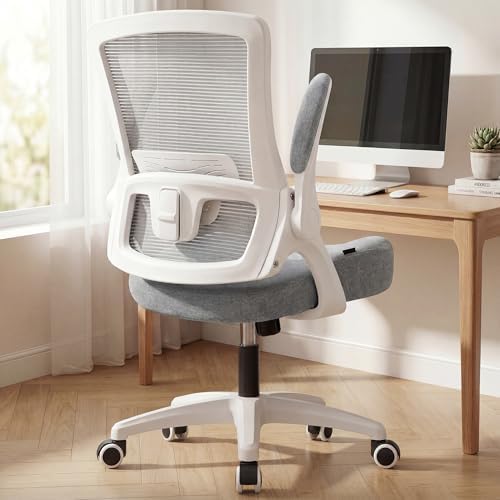
NEO CHAIR Office Desk Chair High Back Mesh Chair Adjustable Lumbar, Black
Adjustable lumbar on a high back frame at the lowest price of the four
Budget mesh tension is the first thing to soften on frames at this level
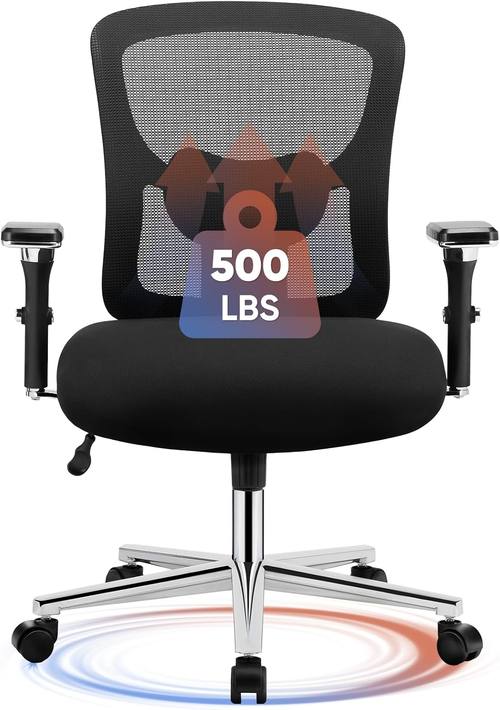
DUMOS Big and Tall Office Desk Chair, 500lbs Heavy Duty Mesh Chair
Rated to 500 pounds, with the wide seat and heavy base that rating requires
Large footprint, and too much chair for a small frame
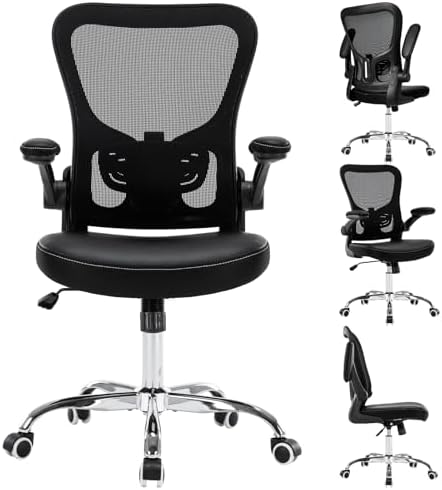
Ergonomic Office Chair, Adjustable PU Leather Computer Desk Chair with Lumbar Support, Flip-Up Arms, Breathable Mesh Back, 360° Swivel Rolling Executive Chair for Home Office, Black
Flip-up arms plus adjustable lumbar, a combination almost nothing else at this price offers
Two materials to maintain, and hinged arms have a joint that can loosen
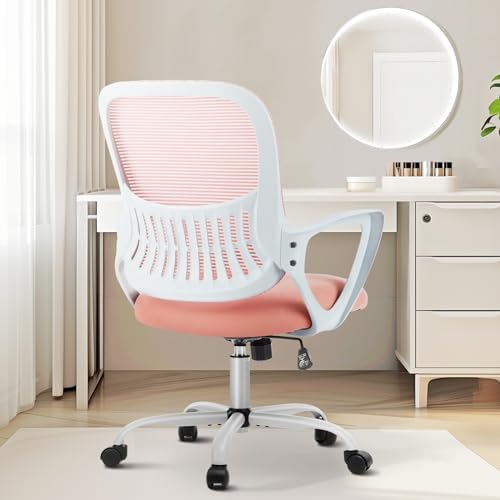
Sweetcrispy Home Office Managerial Executive Chair with Ergonomic Design
The cheapest way to get a padded executive style seat at a desk
The listing leans on the word ergonomic without naming an adjustable lumbar mechanism
Prices and availability were captured from Amazon Creators API and may change.
How I judge a chair at this price
Four things decide whether a cheap chair works for eight hours a day or falls apart in eighteen months, and none of them show up in a marketing photo.
First, does the lumbar support move in place and then stay there? A pad that slides up and down a rail is not an adjustment, it is a suggestion. Second, how deep is the seat, and does the front edge clear the back of your knees by two or three fingers when your back is against the backrest? Third, do the armrests hold position when you put your weight on them, or do they rotate out of the way the moment you lean? Fourth, what happens to the seat pan under load after a year, because that is the part that fails silently and takes your tailbone with it.
Everything else, the color, the stitching, the word ergonomic printed on the box, is decoration.
Lumbar support: the adjustment that matters
Two of these four chairs describe an actual adjustable lumbar mechanism. The NEO CHAIR lists adjustable lumbar support on a high back frame, and the PU leather model lists adjustable lumbar support as well. The DUMOS and the Sweetcrispy describe ergonomic design and support without naming an adjustable mechanism, which usually means a fixed curve built into the backrest.
A fixed curve is not automatically bad. If the curve the factory built happens to match your lumbar curve, you will never touch an adjustment and never miss it. The problem is that you cannot know that from a listing photo, and at this price the return window is the only honest test.
Here is the check I use on any chair with a sliding lumbar pad. Sit normally for twenty minutes. Then reach behind you with one hand and press the pad. If it shifts under your fingers, it will shift under your back by mid-afternoon too. A lumbar support that stays put at 2 p.m. on a Tuesday is the only kind worth paying for.
Seat depth and the big and tall question
The DUMOS is the outlier here, and it is the one I would steer a specific client toward without hesitation. It is rated to 500 pounds, and that rating changes the whole structure of the chair: wider seat, heavier base, thicker lift, larger casters. If you are 6 foot 3 and 290 pounds, the other three chairs are not smaller versions of the same thing. They are a different product category, and one of them will give out on you inside a year.
The trade-off is footprint. A big and tall frame needs room behind the desk. If your desk sits against a wall with two feet of clearance, a wide heavy-duty chair feels like parking a truck in a garage built for a sedan.
For everyone else, seat depth is the number that decides comfort. Too long and the front edge presses behind your knees and cuts off circulation in your calves. Too short and your thighs carry your body weight instead of your sit bones, which is how you get that numb, restless feeling at hour seven.
Armrests: flip-up versus fixed
The PU leather chair has flip-up arms, and I want to explain why that is a real feature and not a gimmick. If you play guitar, work at a desk that sits low, or push the chair under a table between work sessions, fixed arms block you. Flip-up arms solve that in one motion.
The cost is stability. Any armrest with a hinge has a joint, and joints loosen. Test them in the first week: push down hard on each arm, then try to rotate it side to side. If it moves more than a quarter inch, it will wobble within a year, and a wobbling armrest is one of the fastest ways to train yourself into a bad shoulder position.
The other three chairs use fixed arms. Fixed arms are usually sturdier, but they only help if the height suits your shoulders. Your elbows should rest at roughly 90 degrees with your shoulders relaxed, not shrugged. Arms two inches too high make you hike your shoulders all day and then wonder why your neck aches at dinner. Arms too low are nearly as bad, because you lean to one side to find them.
Mesh back, padded seat, and the two-material problem
Two of these chairs are mesh throughout, one is a mesh back with a padded seat, and one is an executive style with upholstery.
Mesh is not automatically breathable, and it is not automatically supportive. Budget mesh has a break-in period, and after that it sags. When a seat pan sags, your hips drop into a hammock shape and your tailbone takes the load that your sit bones were supposed to carry. That is the failure I see most often in inexpensive chairs, and it shows up somewhere between month eight and month eighteen.
A padded seat holds its shape longer, but it holds heat. If you run warm, or you work in a room with poor airflow, a padded seat in August is a genuine cost.
The PU leather model splits the difference: mesh across the back for airflow along your spine, padded seat for structure underneath. Two materials also means two things to maintain. PU leather needs wiping down, because it cracks where it flexes if you let sweat and dust sit on it.
Who each chair actually fits
NEO CHAIR Office Desk Chair High Back Mesh Chair Adjustable Lumbar, Black
This is the chair I would hand to the average office worker: someone between 5 foot 4 and 6 foot, under 250 pounds, who wants an adjustable lumbar pad and a high back without paying for a name. The adjustable lumbar is the reason it wins. The compromise is the mesh, which is the part to watch in year two. If the seat starts to feel like a hammock, that is your signal, not a broken-in chair.
DUMOS Big and Tall Office Desk Chair, 500lbs Heavy Duty Mesh Chair
This is the only chair in the group I would put under a larger body without a caveat. The 500 pound rating is not marketing padding, it is the reason the seat is wider, the base is heavier, and the whole thing sits lower and steadier. If you are tall with a long torso, the taller back matters as much as the weight rating. The compromise is space: measure the gap between your desk and the wall before you order.
Ergonomic Office Chair, Adjustable PU Leather Computer Desk Chair with Lumbar Support, Flip-Up Arms, Breathable Mesh Back, 360° Swivel Rolling Executive Chair for Home Office, Black
This is the best all-rounder for a home office that doubles as something else. Flip-up arms let it disappear under a table, adjustable lumbar covers the lower back, and the mesh back keeps you from overheating against a padded seat. It is the second pick on my list for most people, and the first pick for anyone whose chair has to get out of the way. The compromise is the hinged arms and the PU leather upkeep.
Sweetcrispy Home Office Managerial Executive Chair with Ergonomic Design
This is the budget pick for someone who wants a padded executive look and mostly sits in short stretches: a home desk used for email, paperwork, and video calls rather than nine straight hours of focused work. The listing leans on the word ergonomic without naming an adjustable lumbar mechanism, so go in expecting a fixed curve rather than a dial you can tune. If a fixed curve matches your back, it is the least expensive way into this group.
What I tell clients with back pain
Tell me three things: your height, where it hurts, and your budget. Everything else is marketing.
If the pain is in your lower back and it builds through the day, adjustable lumbar support is the feature worth prioritizing, which puts the NEO CHAIR and the PU leather model ahead of the other two. If the pain is between your shoulder blades, the problem is usually armrest height, and a chair with fixed arms that sit too high will keep irritating it no matter how good the lumbar pad is. If the pain is in your tailbone or your hips go numb, the seat pan is the culprit, and you want a padded seat that holds its shape rather than mesh that sags under you.
And if you are a larger person, do not buy a standard chair and hope. The DUMOS rating exists for a reason.
Bottom line
Ranked for the average body: the NEO CHAIR first for the adjustable lumbar at the lowest price, the PU leather model a very close second for the flip-up arms and mixed materials, the DUMOS first for anyone near or above 250 pounds, and the Sweetcrispy as the budget pick for short sitting sessions and a padded seat.
Ranked for durability over five years, the order changes. A chair is not cheap because of what it costs on the day you buy it. It is cheap if it survives to year five without a sagging seat pan, a wobbling armrest, or a lift that gives out in month fourteen. Whichever of these four you pick, check the arms, check the lumbar pad under load, and check the seat pan before the return window closes. That twenty minute test will tell you more than any review, including this one.