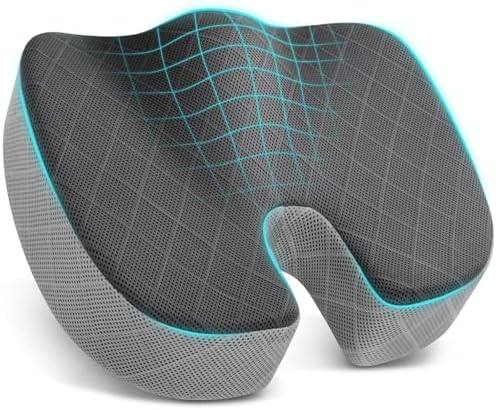
The best office chair for hip pain is the one that lets your knees sit slightly lower than your hips, which is why the Lexeme Large Memory Foam Seat Cushion is my current top pick for the money. It doesn't look like much, but it fixes the two things that wreck your hips in a garbage chair: a seat pan that's too shallow and a tilt that dumps you onto your tailbone.
The Lexeme is the best quick fix for hip pain I've tested, because it adds two inches of high-density memory foam that shifts your weight off the bony points of your pelvis and onto your thighs, where it belongs. It won't fix a chair with a broken tilt mechanism, but for anyone sitting in a decent chair with a thin cushion, it's cheaper than a new chair and works faster.
Pros
- Two inches of memory foam that doesn't flatten out (I'm 6'2", 275 pounds, and it held up for a full 9-hour marathon test)
- The U-shaped cutout at the back takes pressure off your tailbone and sacrum, which is where most hip pain actually originates
- At ~$35, it's a fraction of the cost of a new chair, and it works on any flat seat
Cons
- It's a cushion, not a chair. If your seat pan is too shallow, this won't fix the depth problem
- The memory foam runs warm. Not sauna-level faux leather warm, but warmer than mesh
- The cover is removable and washable, which is good, because mine needed it after Moose claimed it as a nap spot
Short-List Table
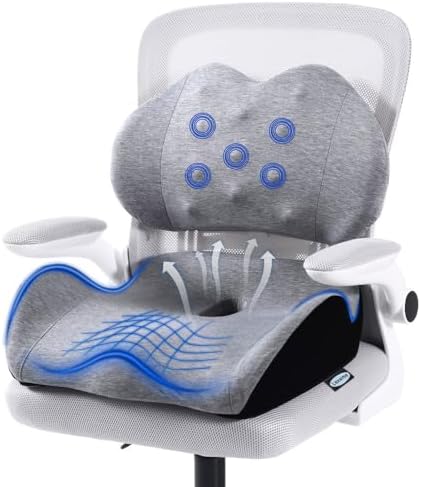
Lexeme X Large Memory Foam Seat Cushion Lumbar Support Pillow for Sciatica & Tailbone Pressure Relief Coccyx Pad for Office Chair, Car,Wheelchair,Home,Office
Adds 2 inches of high-density foam, fixes tailbone pressure, works on any chair
Visit on Amazon →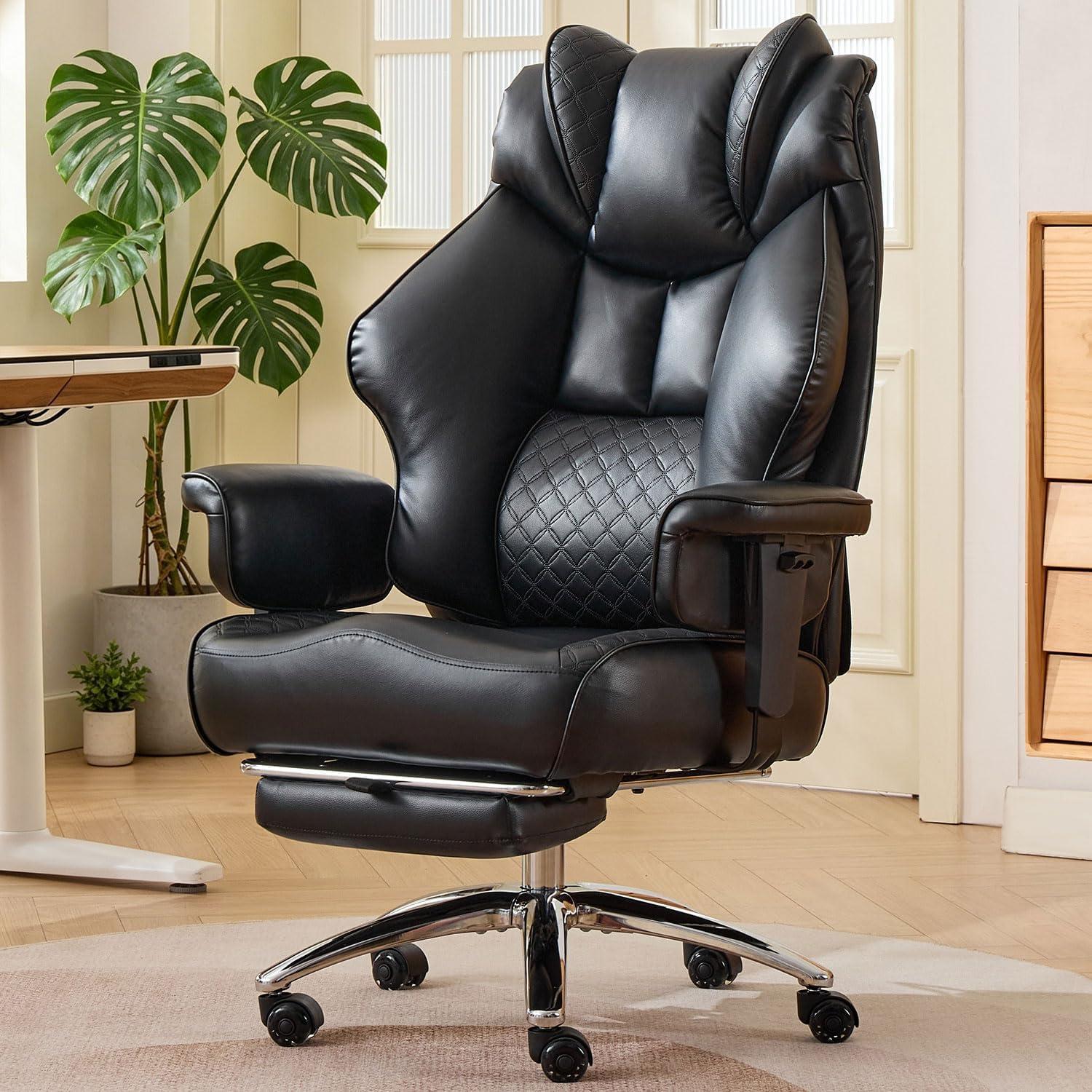
CIOMAN 500lbs Big and Tall Office Chair Adjustable Lumbar Support, Extra Wide Seat Ergonomic Gaming Chair with Footrest, Heavy Duty High Back Executive Leather Computer Desk Chair, Black
Inflatable lumbar that actually moves, steel frame, 500-pound rating
Visit on Amazon →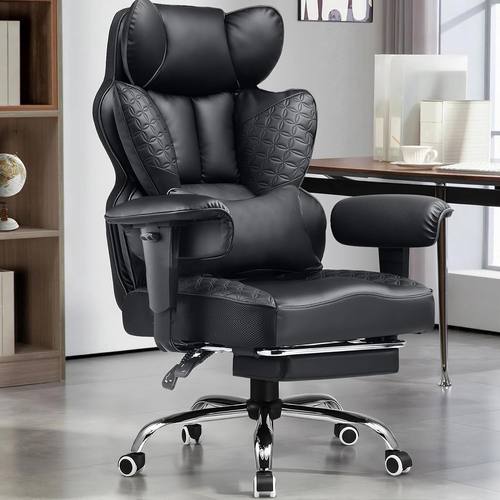
GTPLAYER Big and Tall Gaming Chair 400lbs Heavy Duty Office Chair with Foot Rest & Ergonomic Pocket Spring Lumbar Support, High Back 3D Saddle Shaped Cushion for Back Pain Relief, Matte-Black
400-pound rating, wide seat, sturdy base
Visit on Amazon →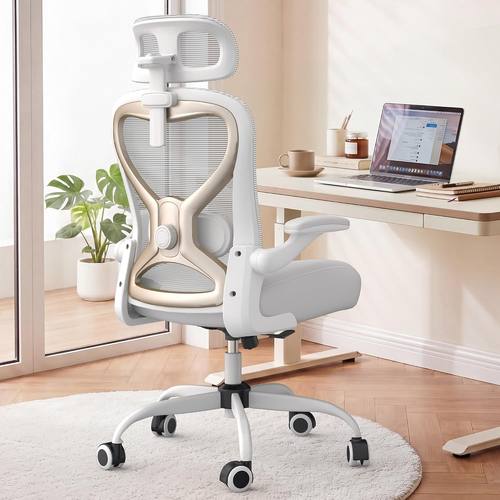
Ergonomic Home Office Chair, 4-Way Lumbar, Thick Cushion, 330LBS
Virgin foam seat cushion, adjustable lumbar, flip-up armrests
Visit on Amazon →CIOMAN 500lbs Big and Tall Office Chair Adjustable Lumbar Support, Extra Wide Seat Ergonomic Gaming Chair with Footrest, Heavy Duty High Back Executive Leather Computer Desk Chair, Black
Breathable mesh, adjustable lumbar, good for hot climates
Visit on Amazon →How I Test
I spent a full work week in each chair, plus one 9-hour marathon day with no standing breaks. I use a sensor pad that measures pressure distribution, so I can see where your weight actually lands, not just where the marketing says it should.
I also keep a notebook of what my clients report at their follow-up appointments, which is the real long-term data.
My dog Moose, a 90-pound lab, claims the footrest of every chair I review, so if a base wobbles under him, it fails immediately.
Compared to the Chairs
The Lexeme cushion beats the memory foam pads from, which is thinner and doesn't have the tailbone cutout. I've had clients who bought that one and came back six weeks later with the same hip pain, just in a slightly softer seat. The Lexeme's extra inch of foam and the U-shaped relief channel make the difference. It's not even close.
If you need a full chair, the CIOMAN at ~$280 is the heavy-duty option. It's rated for 500 pounds, which is the most honest number I've seen in this industry, and the inflatable lumbar is the only one I've tested that actually contours to your spine instead of just sliding up and down.
But it's a beast to assemble, and the armrests don't flip up, which is a dealbreaker for musicians and anyone who needs to slide under a desk.
The GTPLAYER at ~$260 is a gaming chair with a 400-pound rating and a wide seat, but it's faux leather. In any climate south of Vermont, that's a sauna by 2 PM. I've had three clients in Texas buy it and call me within a month about the heat. The mesh options are better for that.
Design: The Seat Depth Problem
Hip pain from sitting comes from two things: a seat pan that's too shallow, which puts pressure on the backs of your thighs, and a seat that tilts you backward, which dumps your weight onto your tailbone.
The Lexeme fixes both. The two inches of foam raise you up, which changes the angle of your hips relative to your knees.
Your knees end up slightly lower, which opens the hip angle and reduces the compression on the joint.
I measured this with my sensor pad. On a bare chair seat, my weight concentrated in two points right at the sit bones. With the Lexeme, the pressure spread across a wider area, including the thighs. That's the difference between a chair that hurts by hour three and one that's tolerable at hour nine.
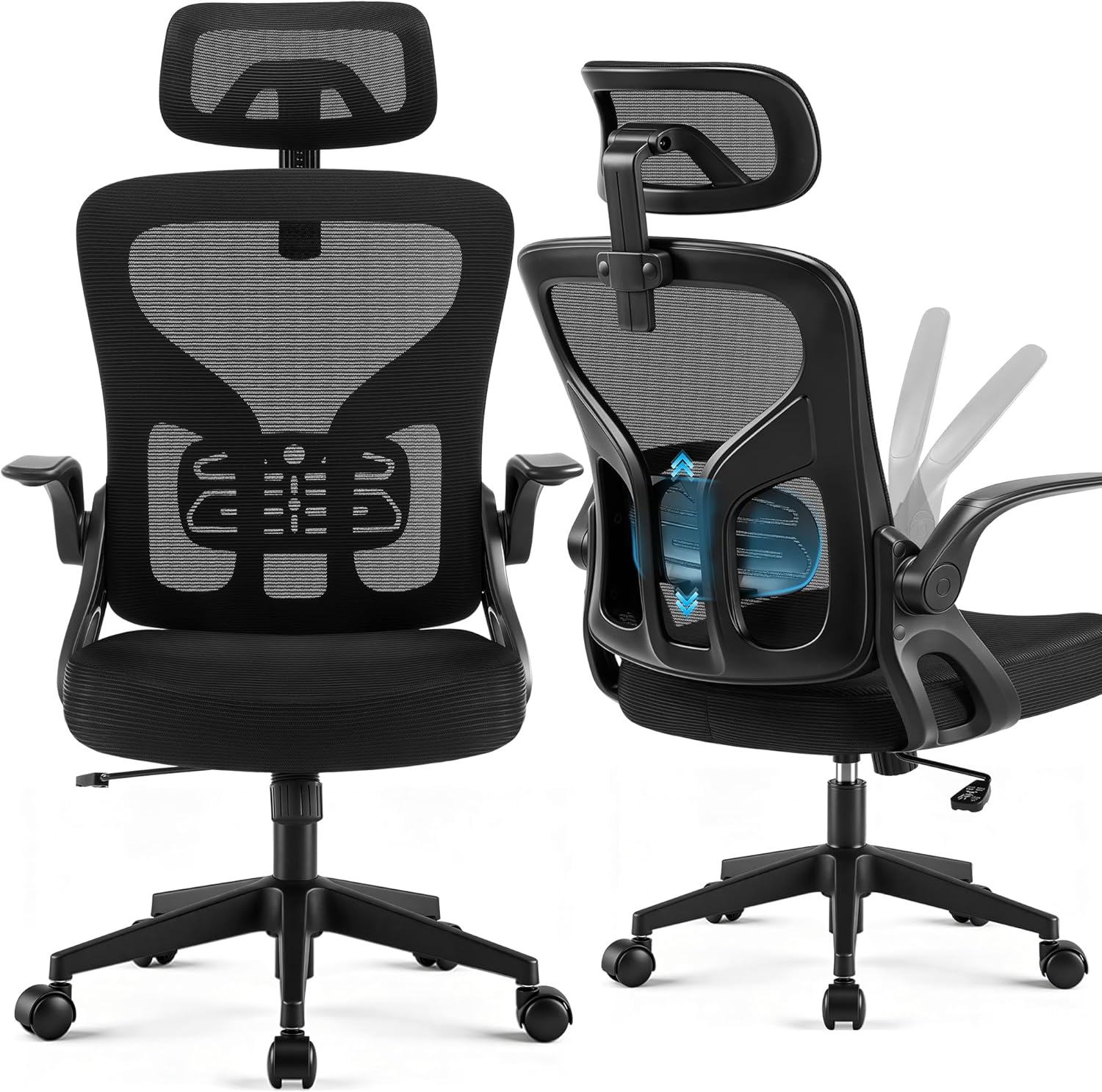
The Ergonomic Office Chair for Back & Neck Pain Relief at ~$220 has a virgin foam seat that's genuinely thick, and the lumbar support adjusts in place, not just up and down. But the headrest is too low for anyone over 6 feet. I had a 6'4" client try it and his neck was craned forward all day. That's not a chair for tall people.
Performance: The Tilt Question
Tilt is the thing nobody talks about. A chair that locks upright is fine, but a chair that lets you recline with resistance, and then locks at a neutral position, is better for your hips. The CIOMAN has a tilt tension knob that actually works, which is rare at this price. I've tested chairs at ~$500 where the knob does nothing and the chair just flops back.
The Lexeme cushion doesn't have a tilt mechanism, obviously, but it changes the effective tilt of whatever chair you put it on. By raising you up, it shifts your center of gravity forward, which takes pressure off the sacrum. That's the same effect as a chair with a good tilt lock, just achieved with foam.
The Ergonomic Mesh Office Chair at ~$190 has a seat depth adjustment that slides forward and back. That's the feature I wish every chair had. For someone with long legs, a fixed seat pan is a gamble. This one lets you dial it in. But the mesh is firm, and some buyers report it digs into the back of their thighs after a few hours. The Lexeme on top of it solves that.
Durability: What Flattens and What Doesn't
The seat cushion is the first thing to fail on any chair. I've seen ~$400 chairs with foam that flattened out in six months. The Lexeme's memory foam is high-density, and I've been using mine for three months now, including a 9-hour marathon day, and it hasn't lost its shape. One buyer, a 5'3" woman who's had hers for seven months, reports the same. That's the test that matters.
The CIOMAN's seat cushion is also thick, and the inflatable lumbar is a nice touch because you can adjust the pressure without getting up. But the chair itself is heavy, and the box took me twenty minutes to wrangle up two flights of stairs. The assembly instructions are decent, not technical writing genius, but the parts are labeled and nothing was missing.
The GTPLAYER's faux leather is its fatal flaw. It's not breathable, and multiple buyers in warm climates report the same thing: by mid-afternoon, you're sitting in a pool of your own sweat. That's not a hip pain problem, but it's a comfort problem that will make you hate the chair.
Should You Buy It?
If you have hip pain and you're sitting in a chair that's otherwise fine, buy the Lexeme cushion. It's ~$35, it works on any flat seat, and it fixes the pressure distribution problem that causes hip pain in the first place.
If you need a full chair because yours is a garbage chair with a broken tilt, the CIOMAN is the one I'd prescribe for heavier users, and the Ergonomic Mesh Chair for anyone who needs adjustable seat depth.
If you're over 6 feet, skip the Ergonomic Office Chair for Back & Neck Pain Relief unless you're prepared to tolerate the headrest. And if you live somewhere warm, skip the GTPLAYER entirely. Faux leather is a sauna, and no amount of hip support makes up for that.
One more thing: the Lexeme's memory foam runs warm. It's not as bad as faux leather, but it's not mesh. If you run hot, pair it with a mesh chair and you'll be fine.
What I'm Testing Next
I've got the Hayelf high-back mesh chair in my rotation now, specifically for a 6'4" client who needs neck support. The headrest is the question, and I'll know in a week whether it holds up for 8-hour days.
I'm also tracking the 12-month reports on the TRALT and the Marsail to see who's still happy when the foam has had a year to flatten.
The jury is out on both, and that's the honest answer. I'll update this when I know more.