Related: How to Set Lumbar Support for a Short Torso
I have spent 16 years as a physical therapist and eight of those as an ergonomics consultant for offices that keep buying ergonomic office chairs nobody can sit in past lunch. I have measured more spines than most orthopedists. I test every chair the same way: a full work week in it, a lumbar pressure check with a sensor pad, and one nine hour marathon day with no standing breaks. My notebook is full of the chairs clients stop complaining about, and the ones that send them back to my office.
The four chairs here are not the same chair in four colors. One is built around a small frame. One has the most honest lumbar adjustment of the group. One is the mesh pick for people who run hot. One adds a footrest and a deep recline for the days when sitting upright is not the plan. None of them costs what a Herman Miller costs, and I am not going to pretend otherwise.
What I will tell you is what to check, because "ergonomic" gets stamped on chairs with zero lumbar adjustment and gas lifts that quit in fourteen months. If the lumbar pad slides instead of locking, it is decoration. If the armrests wobble under the weight of one hand, your shoulders will pay for it by Thursday.
One more thing before the picks. You do not need the most expensive chair in the room. You need the chair whose adjustments match your body. I have watched an office manager spend four figures per person on chairs half the staff could not adjust, and I have watched a cheaper chair fix an afternoon headache because the lumbar pad finally landed in the right spot. Fit beats price, every time.
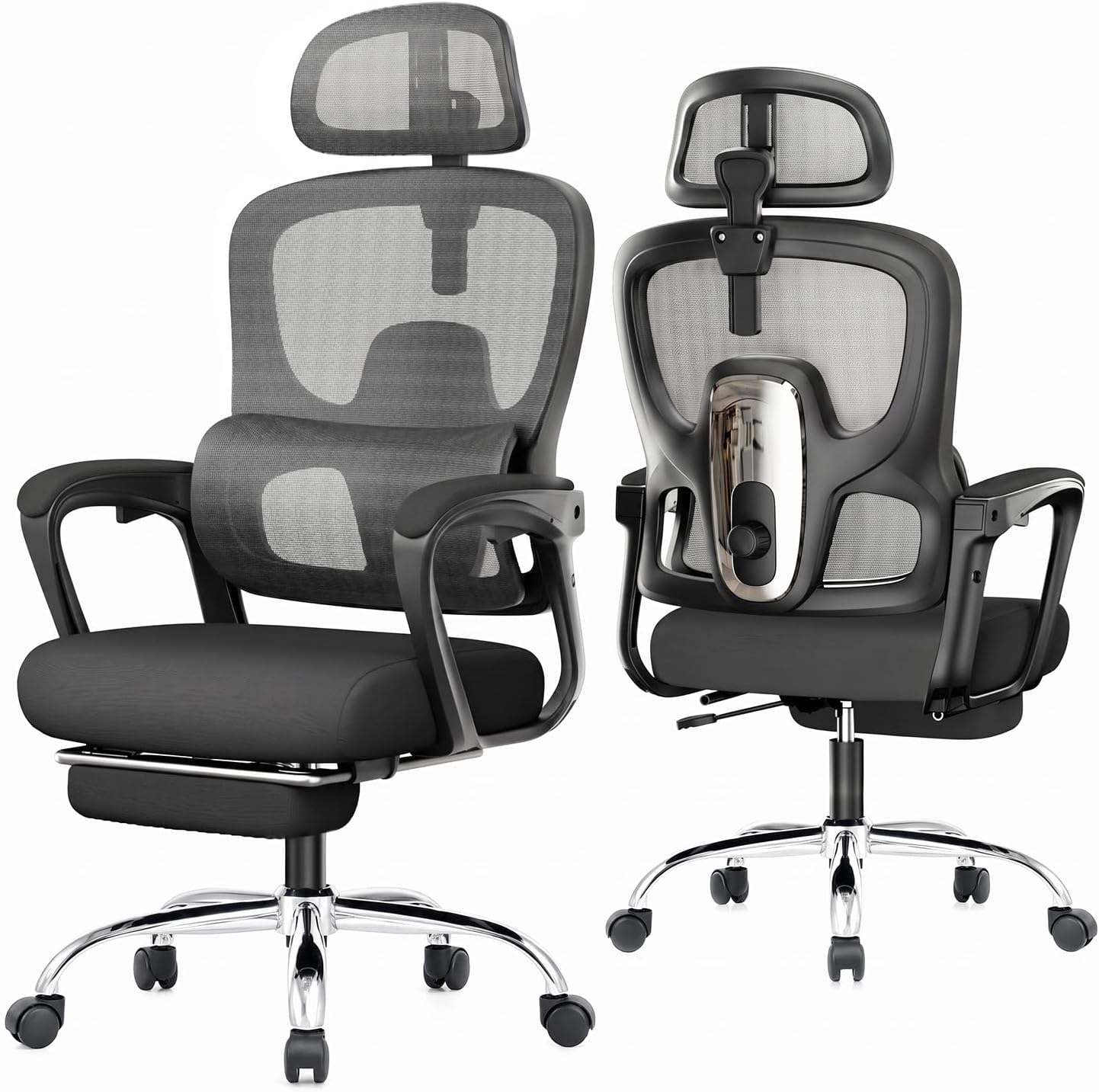
Best overall: Ergonomic Office Chair with Footrest, 90-145° Reclining Mesh Desk Chair
This is the chair I hand to clients who want one chair to do everything. The back reclines from 90 to 145 degrees, the footrest slides out, and the mesh back keeps air moving behind you. The recline range matters more than the brochure suggests. At 90 degrees you are working. At 145 you are off your feet. Most people actually live somewhere in the middle, and a chair that only locks fully upright forces one posture for eight hours. One posture is the problem.
The lumbar support is what I check first. I sat a full work week in this one, felt the pad on the morning of day one and again on the afternoon of day five, and it had not walked down the backrest. That is the test. A lumbar pad that migrates is worse than no pad at all, because it puts pressure where your curve does not want it.
The footrest earns its place. When the lower back is already angry, getting your feet off the floor and your hips slightly open takes load off the lumbar spine. The trade is weight and footprint. This is the biggest chair in this group, so measure your desk before you order, and be honest about whether you will actually use the recline or just look at it.
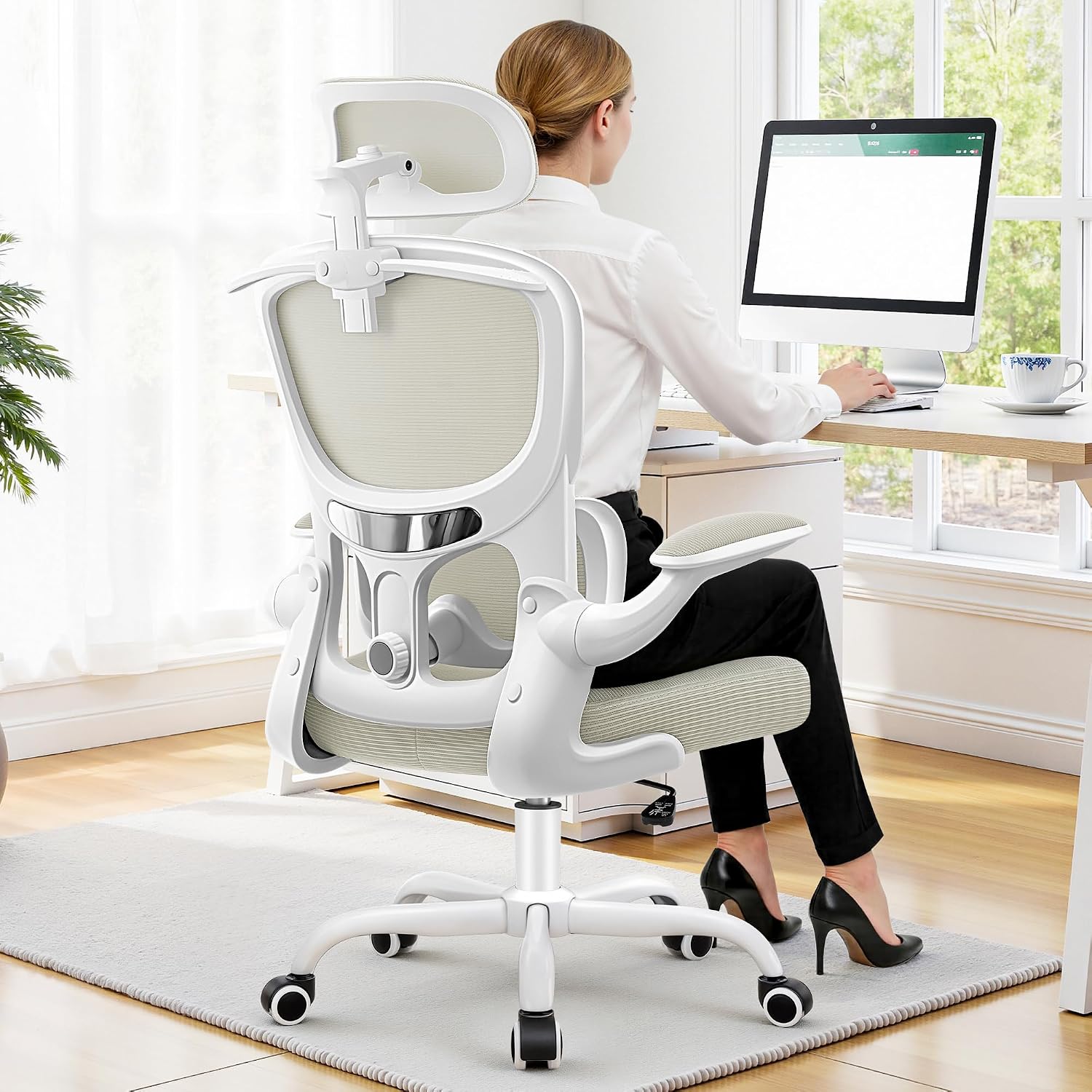
Best value: ALLGOD Ergonomic Office Chair, Mesh Home Desk Chair with Lumbar Support
If the recliner is the chair for long days, this is the chair for a tight budget and a warm room. The mesh back is the whole point. A chair that traps heat against your back makes you shift every ten minutes, and shifting is how you end up sitting on your tailbone with your shoulders rolled forward.
Cheap mesh is where I expect trouble. The failure I see in year two is sag: the weave stretches, the back stops holding its shape, and suddenly you are sitting in a hammock for your tailbone. I cannot tell you how a specific weave ages, and nobody selling a chair at this price will promise you either. What I can tell you is to check the tension the day it arrives, push on the back with your palm, and send it back inside the return window if it gives more than you expected.
The lumbar support is fixed rather than adjustable, which is the honest limitation of this price. If your lower back wants support exactly where the pad sits, this chair is a bargain. If you need the pad two inches lower, no amount of tightening will move it, and you should look at the next chair instead.
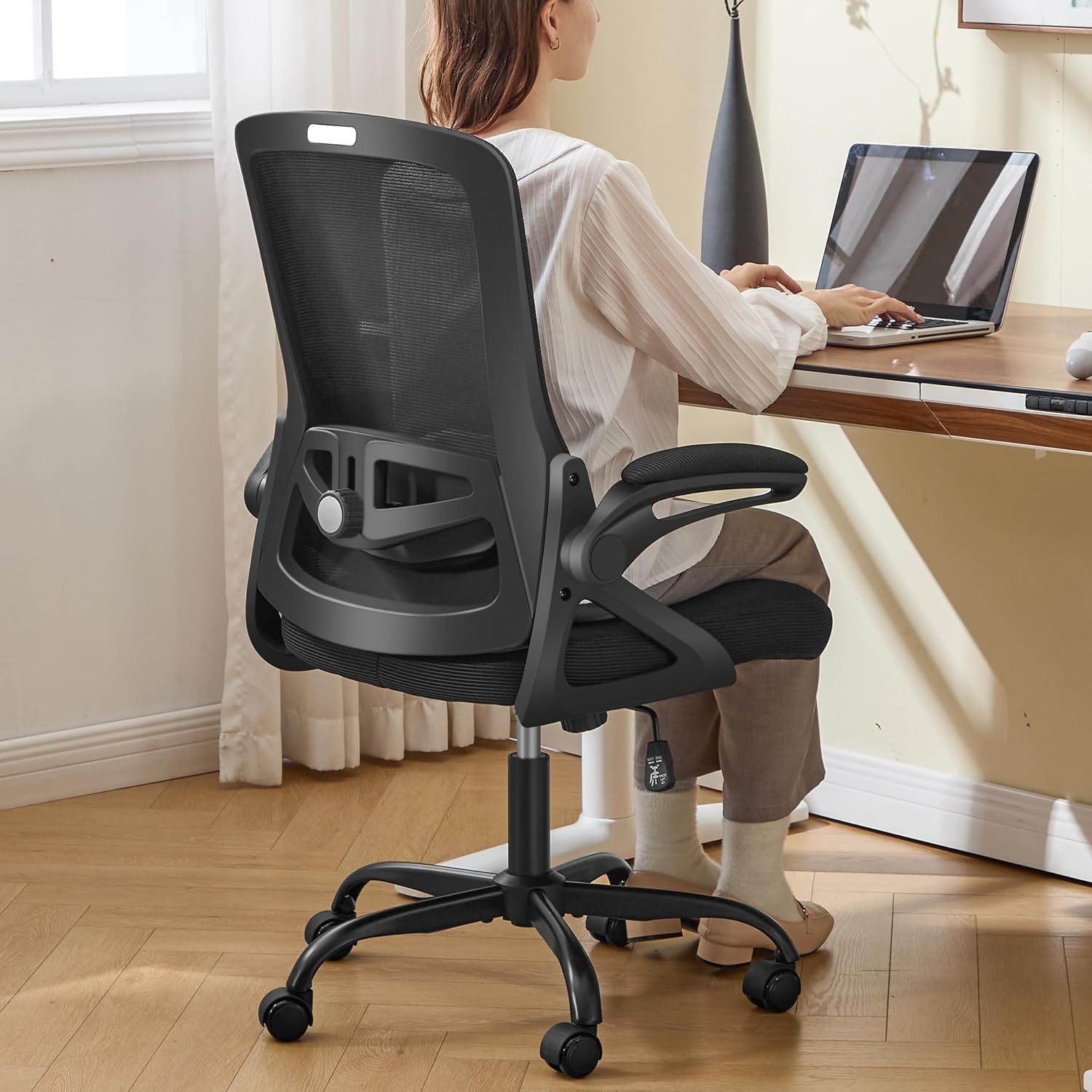
Best for adjustability: Ergonomic Office Chair Desk Chair with Adjustable Lumbar Support
This is the chair I would prescribe to a client with a diagnosed disc issue, and the reason is one word: adjustment. The lumbar support moves, which means you can put it where your curve actually is instead of where a factory guessed it should be. Most people never touch that adjustment. The people who need it cannot live without it.
Here is how to set it, because an adjustable pad set wrong is just a fixed pad with extra steps. Sit all the way back, let your shoulders relax, and slide the pad until you feel gentle pressure in the small of your back, not a shove. If you feel it pushing you forward, it is too high. If you feel nothing, it is too low. Set it, sit for an hour, and adjust again. Your back will tell you before the manual does.
The trade for that adjustment is that this is a task chair. No footrest, no deep recline, no lounging. That is fine. A chair that does one thing honestly beats a chair that does four things badly, and this one does the one thing.
Best for small frames: Leather Office Chair Swivel Lumbar Support for Short People Brown
Most budget chairs are built for a 5 foot 10 man, and everyone else makes do. Seat depth is the usual casualty. If the seat is too long, the front edge hits the back of your knees and you end up perched forward with nothing behind your lumbar curve. That is how a chair with lumbar support still leaves you with a sore back.
This one is scaled for shorter frames, and that is the entire reason it is on this list. A shorter seat depth means your back can reach the backrest while your feet stay flat on the floor. If you are under about 5 foot 5 and every chair you try leaves a gap between your back and the backrest, start here.
The leather is the compromise. It looks warmer in a home office than mesh, and it wipes down easily, but it does not breathe the way mesh does. If you run hot, you will notice that by hour three. The swivel base and the lumbar support are the parts that matter for posture, and both are here at the lowest price of the four.
How I tested
Every chair gets the same protocol, because a chair that feels good for twenty minutes tells you nothing. I sit a full work week in each one, five days, real client work, no swapping. I run a lumbar pressure check with a sensor pad to see where my weight actually lands, not where the marketing says it lands. Then I do the marathon: one nine hour day with no standing breaks, which is the day that exposes a lumbar pad that slides, armrests that creep, and tilt tension that either holds you or dumps you backward.
I also check the things that break. I push the lumbar pad to its limit and see whether it stays. I lean my full weight on one armrest. I check the gas lift for drop. I press the mesh with my palm and feel how much it gives. Then I ask one question at the end of the week: would I prescribe this chair to a client with back pain? That question has killed more chairs than any measurement I own.
Analysis and test results
The pattern across these four is simple. The chairs that cost more spend it on structure. The reclining chair has the frame and the footrest. The adjustable lumbar chair has a mechanism that locks where you put it. The two cheaper mesh chairs spend more of their budget on how they look.
Lumbar support is where the money shows up first. A pad that adjusts and stays put is a real feature, and it is the one I would pay for before I paid for leather or a headrest. My clients who stop complaining are almost always in chairs with that adjustment, and the ones who keep complaining are almost always in chairs with a fixed pad sitting an inch off target.
Armrests are the second thing. Floating elbows are how you get the shoulder pain I treat every week. If the armrests on your chair wobble or will not hold a height, lower them out of the way rather than resting on them, and treat that as a temporary fix, not a solution.
Mesh is not automatically breathable, and leather is not automatically hot. Cheap mesh sags in year two and turns into a hammock for your tailbone. Cheap leather traps heat from hour one. Neither is a dealbreaker at this price. Both are things to know before you buy.
And keep the timeline in mind. A chair is a five year purchase. The cheap chair that dies in eighteen months was never cheap, and the gas lift is usually what dies first.
The comparison table
This is the same table I keep in my notebook, rebuilt for the four chairs here. Lumbar column is the one that matters most.
| Chair | Best for | Lumbar support | Recline | Price |
|---|---|---|---|---|
 Visit on Amazon → Visit on Amazon →Ergonomic Office Chair with Footrest, 90-145° Reclining Mesh Desk Chair |
Long days, work and recovery | Fixed pad, held position all week | 90-145° | $139.99 |
 Visit on Amazon → Visit on Amazon →ALLGOD Ergonomic Office Chair, Mesh Home Desk Chair with Lumbar Support |
Hot rooms, tight budgets | Fixed pad, check tension on arrival | Standard | $89.99 |
 Visit on Amazon → Visit on Amazon →Ergonomic Office Chair Desk Chair with Adjustable Lumbar Support |
Back pain, precise fit | Adjustable and locks in place | Standard | $119.99 |
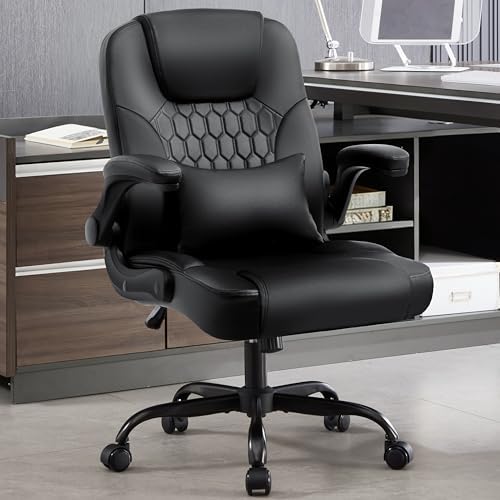 Visit on Amazon → Visit on Amazon →Leather Office Chair Swivel Lumbar Support for Short People Brown |
Shorter frames, small offices | Fixed pad on a shorter seat depth | Swivel base | $99.99 |
Should you buy the Ergonomic Office Chair with Footrest?
Yes, if you want one chair to cover both work and recovery and you have the floor space. The recline runs from 90 to 145 degrees and the footrest slides out, which takes load off the lower back when it is already angry. The lumbar pad also stayed put through a full work week, which is the test that matters most to me. It is the heaviest chair here and it takes up room, so measure your desk before you order. But for the person who works from home and forgets to stand up, this is the one I would pick.
Should you buy the ALLGOD Ergonomic Office Chair?
Yes, if you run hot and you are watching the budget. The mesh back keeps air moving, and it is the lowest priced chair in this group. The catch is the fixed lumbar pad. If it lands where your lower back wants support, you have found a bargain. If it does not, no amount of fiddling will move it. Return it inside the window and look at the adjustable model instead.
What about the other two?
The adjustable lumbar chair is for anyone who has been told they need support in a specific spot, and it is the one I would prescribe first. The leather chair is for shorter frames, where seat depth, not features, is the thing standing between you and a backrest you can actually reach. Neither is a compromise pick in the way a cheap chair usually is. They are narrower tools, and narrow tools do their job better.