
Related: Office Chair Setup: The 8 Adjustments People Skip
I have been a physical therapist for 16 years, and for the last 8 I have been the person offices call after they buy forty chairs that nobody can sit in for a full day. When someone asks me to help them find a big and tall ergonomic office chair, they expect me to start with weight ratings. The weight rating is the least useful number on the page. What matters is which parts fail first, and whether you can replace them before you replace the entire chair.
I keep a notebook of which chairs my clients stop complaining about. It is a short list, and it has almost nothing to do with price. It has a lot to do with whether the lumbar support adjusts in place, and whether the frame still feels solid in year three.
So here is how I think about this category: the chairs worth your attention, the one replacement part nobody mentions, and the questions I ask before I put my name on a recommendation.
Best Overall: CIOMAN 500 lbs Big and Tall Office Chair
This is the chair I would point a client to first if they are past the weight most office chairs were quietly designed for and they want the features to come along with the frame. The listing claims a 500 pound capacity, a high back, a wide cushion, rubber wheels, a rocking function, and an inflatable lumbar support.
The inflatable lumbar support is the part that makes me sit up. In my world, "adjustable lumbar" usually means a plastic pad that slides up and down a track and calls it a day. That is not adjustment, that is decoration. An inflatable pad changes the depth of the support sitting under your lumbar curve, which is the direction that actually matters. You can let air out in the morning when you want to sit upright and add a little in the afternoon when your lower back has had enough. That is a real adjustment, done in place, without tools, without standing up.
Rubber wheels are the second thing I notice. Most casters are hard plastic, which is fine on carpet and miserable on hardwood, and they get loud. Rubber rolls quieter and is kinder to a wood floor.
The rocking function is a tilt you either want or you don't. I like a chair that rocks, because it keeps you moving, and moving is what keeps a spine from stiffening up over a nine hour day. But a rocker with a loose tension knob turns into a slouch machine. Set the tension, then check it again in a week, because tilt tension drifts on every chair I have ever sat in.
The honest caveat is the seat. A wide, deep cushion helps a lot of people and hurts a few. If your legs are short relative to your torso, a deep seat hits the back of your knees and pushes your hips forward. Seat depth is the spec everyone ignores and the one that causes the most knee and hip complaints in my office.
Best for Standard Frames: Amazon Basics Ergonomic Executive Chair
Flip-up armrests are the reason this chair is in the article. Armrests are not optional in my book. Floating elbows are how I end up treating shoulder pain every single week. But there are real moments when you need the arms out of the way: a keyboard tray that sits low, a small desk, a guitar in your lap, a toddler who wants up. Flip-up arms are the only design that gives you both, and the fact that they flip means you can push the chair all the way under the desk when you are done.
The cream leather is a practical choice, not just a looks choice. Leather wipes clean with a damp cloth, and in offices where people eat lunch at their desks, fabric chairs age badly. The adjustable height gas lift and the lumbar support cover the basics.
Where I would stop: this is a standard executive frame. It is not built for a big and tall sitter, and the parts that would take the stress, the base, the cylinder, and the tilt mechanism under the seat, are the wrong parts to overload. That is not a knock on the chair. It is a fit problem, and fit problems are the ones I see every week.
Best Plain Heavy Duty Frame: Big and Tall Office Chair, Heavy Duty Office Chair for Heavy People
The listing name tells you almost nothing, and that is itself information. There is no inflatable lumbar, no rocking function, no rubber wheels promised, no armrest detail. What you are buying here is a heavy duty frame and a wider seat, and the value of that depends entirely on what is underneath the foam.
Three things I would verify before ordering. First, the base: steel or aluminum rather than nylon, because the base is what takes the sideways load when you lean. Second, the cylinder class, because a cheap gas lift is the first thing to fail on any chair and the first thing to fail on a heavy duty chair. Third, whether the tilt mechanism is a heavy duty unit or a standard one. If a listing will not tell you any of that, that silence is an answer.
For a sitter who wants a wide, firm seat and a chair that does not flex when they lean back, this is the right category. For someone with active lower back pain, a fixed lumbar is the risk, because you cannot tune it to your own curve.
The Part Nobody Talks About: Heavy Duty Tilt Control Mechanism
This is the section nobody writes and everybody eventually needs. In my notebook, the part that ends a heavy duty chair's life is almost never the foam and almost never the back. It is the tilt mechanism under the seat: the plate, the spring, and the lock. A heavier sitter puts far more torque through that part than the average office worker does, and when it goes, the symptoms are obvious. The chair starts leaning to one side. The lock stops holding. The seat rocks on the plate when you shift your weight.
If the frame, the foam, and the gas lift are still solid, you do not need a new chair. You need this part. It is listed as a heavy duty tilt control mechanism with a 10 x 6 mounting pattern, and that number describes the plate size, not a universal fit. Before you order, flip your chair over, look at the plate bolted to the underside of the seat, and match the hole spacing and the mounting pattern. If the pattern does not match, the part will not go on, no matter how heavy duty it is.
While the chair is upside down, check the gas lift for play and the base for cracks. Doing both jobs in one session saves you a second disassembly in three months.
How I judge a big and tall chair
This is the protocol I run on every chair that comes through my office, and it is the same list I hand to clients.
The lumbar test. Does the support adjust in place, or does it just slide up and down a track? A support that only slides is not supporting your lumbar curve, it is decorating your back. If I have to stand up and re-bolt something to change the support, it fails.
The nine hour test. Can I spend a full work day in it without standing up to relieve pressure? Most chairs feel fine for two hours. That is not the test.
The armrest test. Do the armrests hold their position under pressure, or do they creep and wobble the moment you lean on them? Wobbly armrests are a pet peeve of mine because they push your shoulders forward without you noticing.
The tilt tension test. Can you set the resistance so the chair supports you at the angle you actually sit at, rather than dumping you backward or locking you upright?
The prescription test. Would I hand this chair to a client with back pain and expect to hear from them in a year for the right reasons? If the answer is no, none of the other results matter.
What actually fails first, and the math that follows
Gas lifts. Every time. A chair with a dead cylinder is a stool with extra steps, and it usually happens somewhere between month 14 and month 20. The second most common failure is the tilt mechanism, which is why that replacement part above earns a section of its own.
Armrests wobble, mesh sags, and casters crack. Cheap mesh is not automatically breathable, and when it sags in year two it becomes a hammock for your tailbone, which is the opposite of what you bought it for.
Here is the math I give offices. A chair is a five year purchase. The cheap chair that dies in 18 months was never cheap, it was a rental. The question is not whether you can spend less today, it is which parts you can replace later. A chair with a replaceable tilt mechanism, a replaceable cylinder, and a base that does not crack is worth more than a chair with a nicer brochure.
The big and tall office chair reference table
This is how I line these up when a client asks me to compare them. Nothing here replaces measuring your own body: your seat depth, your elbow height, and where your lumbar curve actually sits. These are the specs that decide whether a chair is worth the trip.
| Chair | Best for | What the listing actually claims | Notes |
|---|---|---|---|
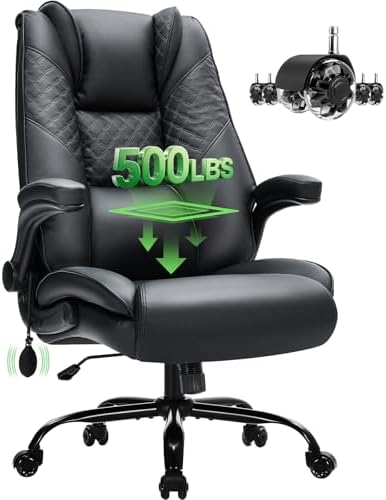 Visit on Amazon → Visit on Amazon →CIOMAN 500 lbs big and tall chair |
Heavier sitters who want real lumbar adjustment | 500 pound capacity, inflatable lumbar, rubber wheels, rocking function, high back, wide cushion | Check current Amazon price |
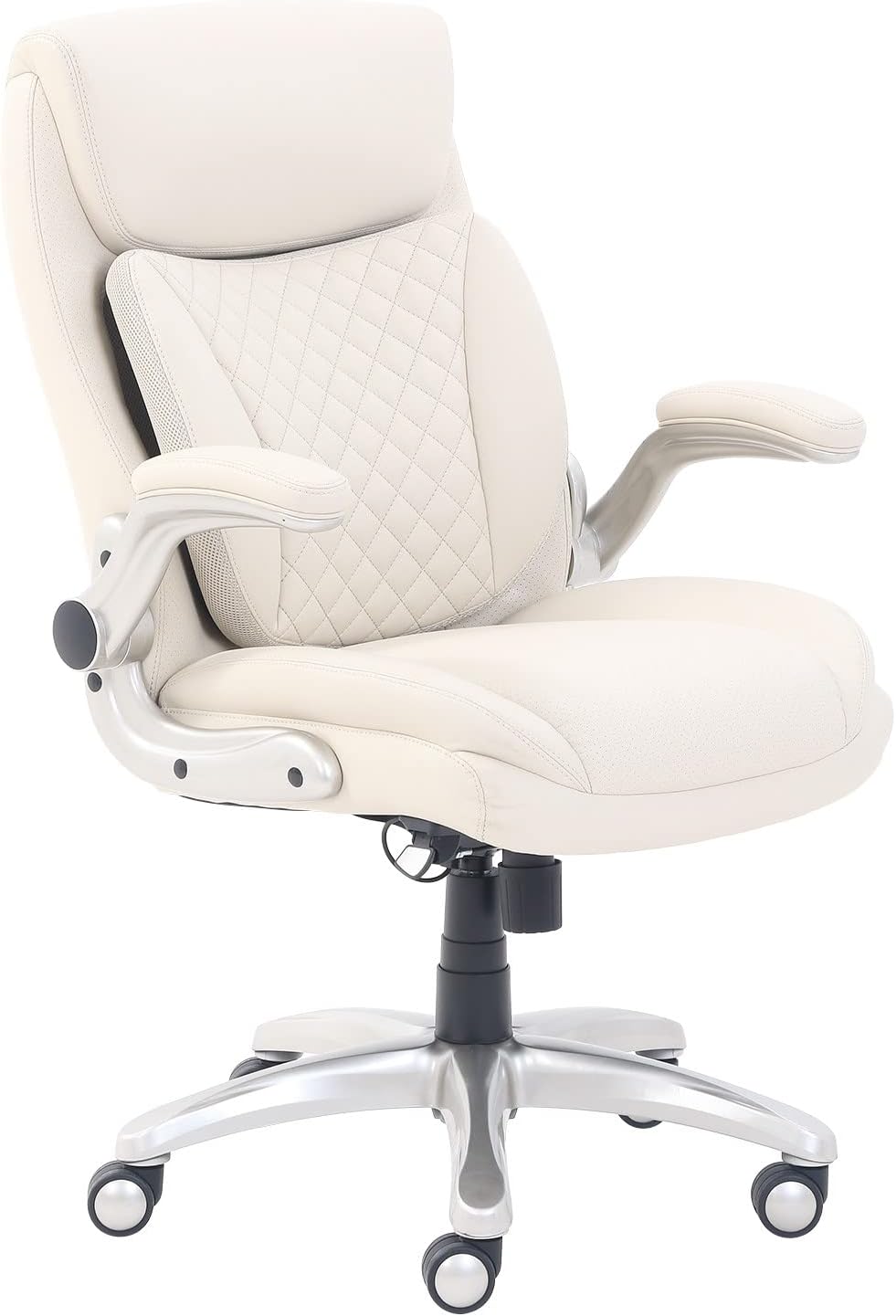 Visit on Amazon → Visit on Amazon →Amazon Basics ergonomic executive chair |
Standard frames, small desks, keyboard trays | Lumbar support, flip-up armrests, adjustable height, cream leather | Check current Amazon price |
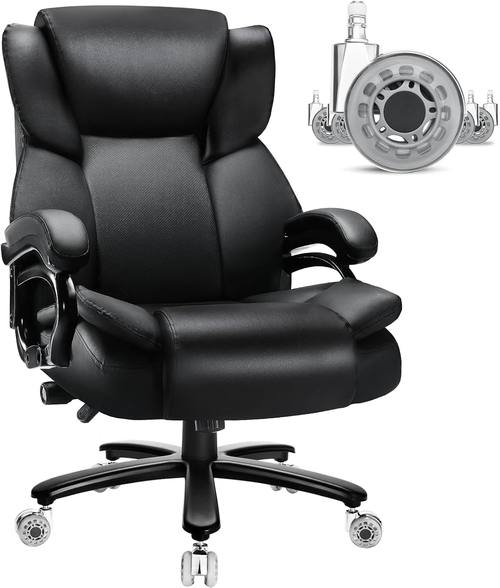 Visit on Amazon → Visit on Amazon →Big and tall heavy duty chair |
Wide, firm seat on a plain heavy duty frame | Heavy duty build for heavier users | Check current Amazon price |
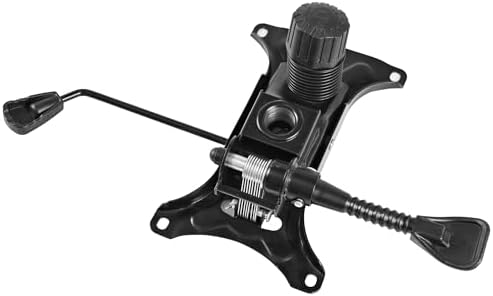 Visit on Amazon → Visit on Amazon →Heavy duty tilt control mechanism |
Chairs with a dead tilt lock and a good frame | Replacement part, 10 x 6 plate | Match your mounting pattern first |
The pattern in that table is the pattern in my notebook. The chairs that last are the ones where the parts that wear out can be replaced. The chairs that end up in a landfill are the ones where a $40 part is welded into a $300 frame.
Should you buy the CIOMAN 500 lbs big and tall chair?
Yes, if you want lumbar support that changes shape rather than a pad that slides on a track. The inflatable pad is the feature that separates it from everything else in this price range, and the rubber wheels and 500 pound capacity claim line up with what a heavier sitter actually needs from a frame. Set the tilt tension on day one and recheck it in a week.
The caveat is the seat. A wide, deep cushion is wonderful for long legs and a problem for short ones. Measure from the back of your knee to the back of your hip before you order, because seat depth is the one spec you cannot fix with a wrench.
Should you buy the Amazon Basics ergonomic executive chair?
Yes, for a standard frame and a standard budget. The flip-up armrests are the reason I would pick it over the dozens of identical executive chairs on the market, because they let you keep your elbows supported and still clear a keyboard tray. The leather is easy to live with.
But be honest with yourself about which category you are shopping in. If you are looking for a big and tall ergonomic office chair, this is not it, and the failure will show up in the base and the tilt mechanism long before it shows up in the foam.
Should you buy the replacement tilt mechanism?
Yes, if the rest of your chair is still solid. It is the cheapest repair in this article and it saves a chair that is otherwise fine. Take the old mechanism off first, or at least measure the plate and the hole spacing, and match the 10 x 6 pattern before you order. If your chair is also losing height and the base is cracking, put the money toward a new chair instead.